Spring Spawn on Lake Cumberland
Understanding spawn patterns for largemouth, smallmouth, and spotted bass
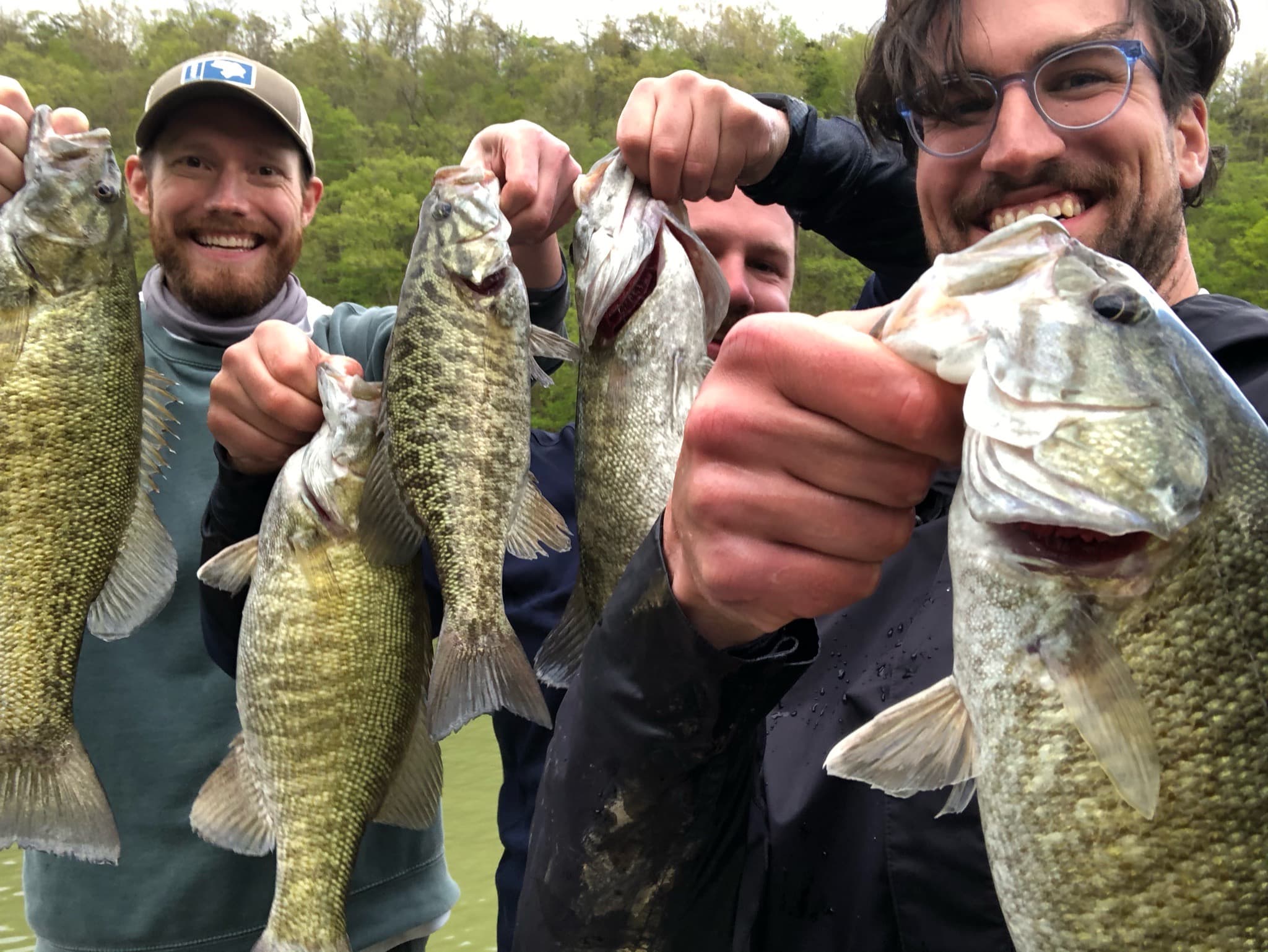
Spring bass on Cumberland can be aggressive and plentiful when conditions align
The Spring Transition on Cumberland
On Lake Cumberland, the spring transition typically begins in late February to early March when water temperatures start climbing from the mid-40s. Being a deep, clear reservoir, Cumberland warms slower than shallower lakes—expect the spawn to occur 2-3 weeks later than nearby shallow lakes.
Phase 1Pre-Spawn (50-58°F)

Pre-spawn success on Cumberland
The pre-spawn period is often the best time for trophy bass on Cumberland. Bass are staging in transition areas between their winter haunts and spawning grounds, feeding aggressively to prepare for the energy-intensive spawn. On Cumberland, this typically runs from mid-March through early April.
Smallmouth Pre-Spawn
- • Stage on main lake points and chunk rock banks
- • Relate to 45-degree banks near spawning flats
- • Feed heavily on crawfish (red/orange baits excel)
- • First to move shallow as temps approach 55°F
Largemouth Pre-Spawn
- • Stage on secondary points inside creek arms
- • Relate to the first major drop-off near pockets
- • Key on wood cover and dock posts
- • Move shallow when temps hit 55-58°F
Spotted Bass Pre-Spawn
- • Stage on bluff walls and steep rock banks
- • Often deeper than smallmouth (20-30 ft)
- • Favor clearer water on lower end of lake
- • Can spawn at cooler temps (55°F+)
Best Pre-Spawn Tactics on Cumberland
Target transition areas with access to both deep and shallow water. Jerkbaits, crankbaits, and Alabama rigs excel during pre-spawn. Fish the warmest water you can find—protected northern coves and the backs of creeks warm fastest. The full moon periods in late March and early April are prime time for trophy smallmouth and largemouth.
Phase 2Spawn (58-68°F)

Spawn season produces quality fish
The spawn on Cumberland typically runs from mid-April through early May. Bass need stable water temperatures and levels for successful spawning. Sunlight is critical—eggs need 3+ consecutive sunny days to hatch (about 4 days at 68°F). Not all bass spawn simultaneously, so you'll find pre-spawn, spawning, and post-spawn fish throughout this period.
Smallmouth Spawn
- • Spawn at 58-65°F (first to bed)
- • Beds on gravel flats, pea gravel points
- • Depth: 4-12 ft (deeper than LMB)
- • Beds appear as dark spots on bottom
- • Males highly aggressive on beds
Largemouth Spawn
- • Spawn at 62-68°F (peak at 65-68°F)
- • Beds in protected pockets and coves
- • Depth: 1-5 ft (shallowest)
- • Beds appear as light circles
- • Near wood, brush, or dock posts
Spotted Bass Spawn
- • Spawn at 57-74°F (widest range)
- • Beds on rock/gravel, similar to SMB
- • Variable depth, can spawn deeper
- • Less predictable than SMB/LMB
- • Concentrate on lower, clearer end
Spawning Behavior Notes
Male bass build and guard the nest for 7-14 days after eggs hatch. Females leave immediately after depositing eggs. Males are aggressive and will attack anything near the bed. Full and new moon phases often coincide with peak spawning activity when temperatures are in range.
Phase 3Post-Spawn (68-75°F)
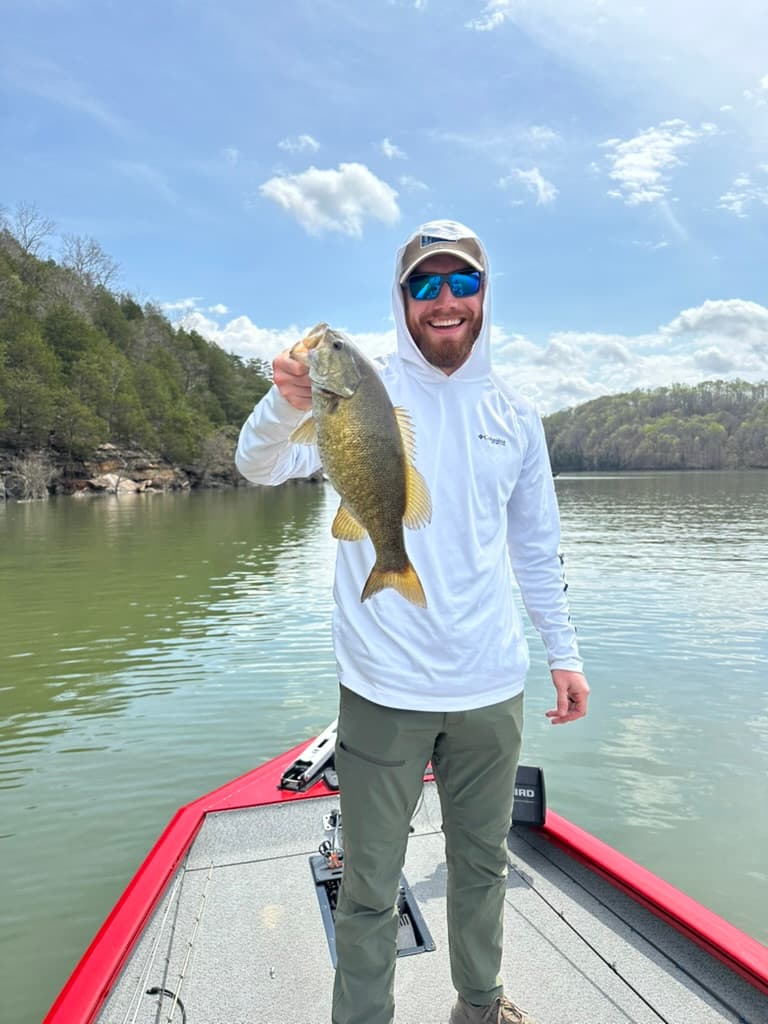
Spring smallmouth on Cumberland
Post-spawn on Cumberland runs from mid-May through June. This can be the trickiest period to fish—bass are exhausted from spawning and their feeding patterns are unpredictable. Understanding the recovery phases helps target fish more effectively.
Days 1-7: Recovery
- • Bass exhausted, minimal feeding
- • Suspend near spawning areas
- • Males still guarding fry
- • Females begin moving out
- • Tough fishing, slow presentations
Days 7-14: Transition
- • Appetite slowly returns
- • Relate to first breaklines
- • Key on easy meals (shad, bluegill)
- • Males abandon fry
- • Topwater starts to work again
Days 14-30: Summer Pattern
- • Aggressive feeding resumes
- • Moving toward summer spots
- • Thermocline developing
- • Early morning/late evening best
- • Shad patterns become key
Post-Spawn Locations on Cumberland
Look for post-spawn bass on the first points and drops outside spawning areas. Smallmouth often suspend over deep water near spawning flats. Largemouth relate to docks and laydowns near creek channels. Topwater and finesse tactics both produce during the transition.
Spawn Phase Summary Table
| Phase | Temps | Timing | Key Areas | Behavior | Best Baits |
|---|---|---|---|---|---|
| Pre-Spawn | 50-58°F | Mid-Mar to Early Apr | Secondary points, staging banks | Aggressive feeding, staging | Jerkbaits, crankbaits, A-rigs |
| Spawn | 58-68°F | Mid-Apr to Early May | Gravel flats, protected pockets | Males on beds, females cruising | Soft plastics, creature baits |
| Post-Spawn | 68-75°F | Mid-May to June | First drops, main points | Exhausted, then aggressive | Topwater, drop shots |
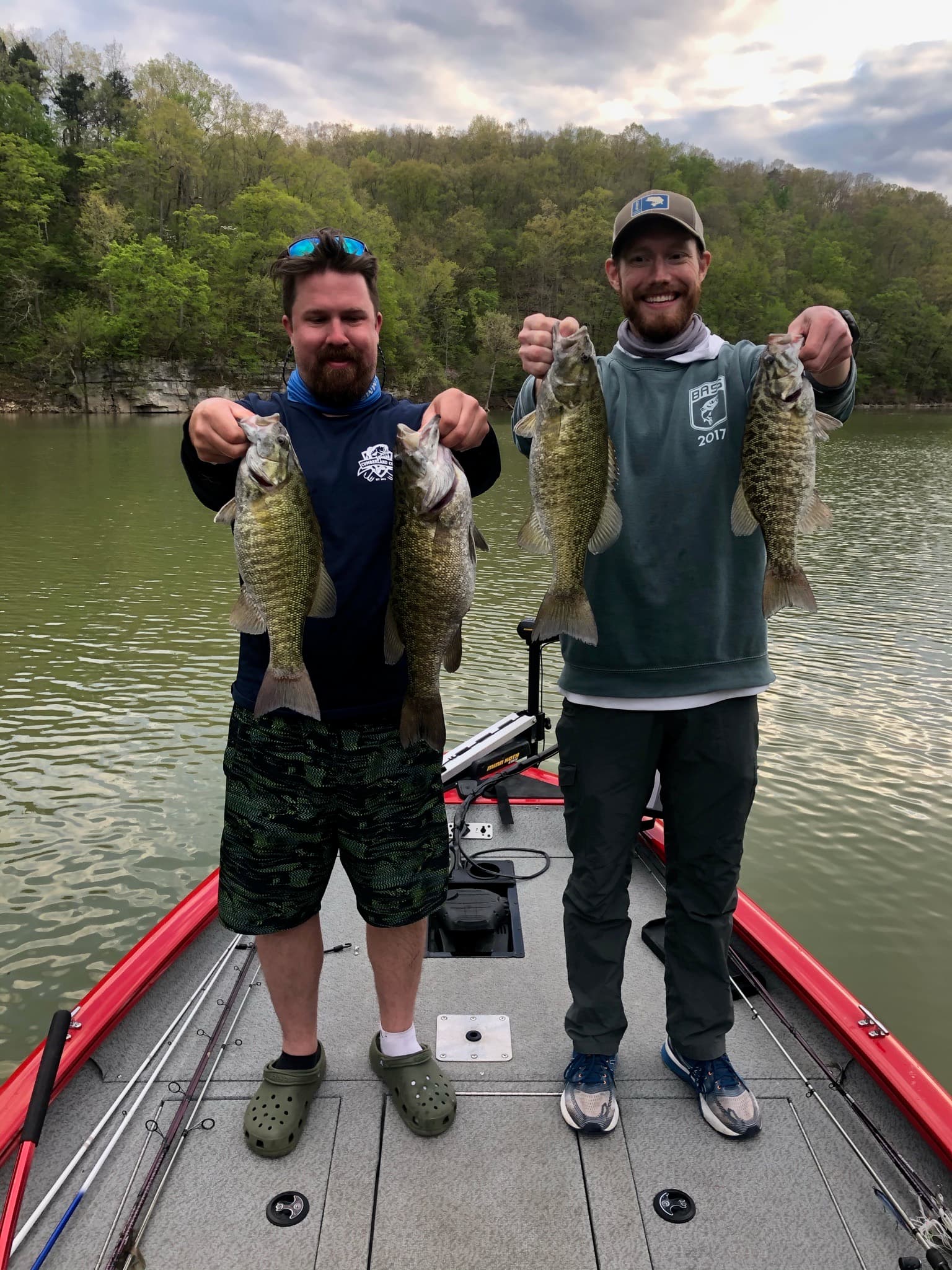
Spring on Cumberland delivers consistent quality fishing for those who understand the patterns
Species-by-Species Spawn Patterns
Smallmouth Bass
Cumberland is a world-class smallmouth reservoir
Cumberland-specific: Cumberland is explicitly one of Kentucky's "world-class smallmouth reservoirs." Smallmouth often spawn earlier than largemouth when water temps hit that 58-65°F window. Look for them on gravel flats, rocky points, and chunk rock banks throughout the lake.
Largemouth Bass
Cumberland pockets and creeks matter most
Cumberland reality: Backs of pockets, protected coves, wood/brush where available. Largemouth still prefer more protected, shallow spawning habitat than smallmouth. Their beds often appear as light-colored circles on the bottom.
Spotted (Kentucky) Bass
Common in major KY lakes, especially clearer water
Cumberland pattern: Spots often show up strongly on the lower end and dam-influenced clearer water patterns. They can spawn over a wider temperature range and at variable depths, making them somewhat less predictable than largemouth or smallmouth during the spawn.
Critical Variables for Spawn Success
Surface Water Temp + Trend
- • Smallmouth: target 60-65°F for active spawning
- • Largemouth: target 62-65°F for spawn onset
- • Warming trend is positive; cold fronts can delay
Lake Level + 3-7 Day Change
- • Cumberland is managed; pool framework is published
- • Stable levels (±0.5 ft) are ideal for nesting
- • Drop >2 ft can leave nests exposed and fail
Water Clarity by Zone
- • 1.5-4 ft visibility is the sweet spot
- • Lower end clarity makes moonlight matter more
- • Ultra-clear = spooky bedding fish
Wind + Cloud Cover
- • 4-12 mph adds chop, reduces visibility/pressure
- • Overcast helps with spooky fish
- • Calm + clear = fish can see you coming